
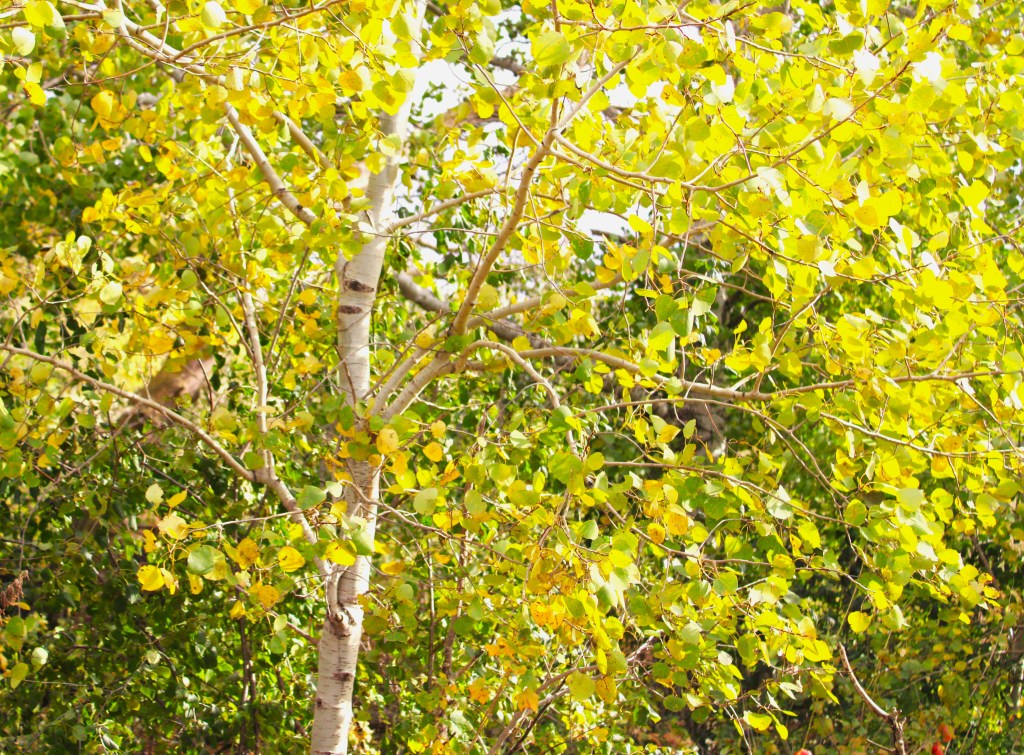
A lone paper birch tree, betula papyrifera, stood in the shady side yard of my childhood farm, a white beacon in a dim yard, unassuming and yet eye-catching. I knew from a very early age that this was a special tree; Mom had all but said so when she forbade us to climb this fragile dwarf among the pines. Given the nature, or rather the structure of a paper birch, it wasn’t a prime specimen for climbing anyway, not that we didn’t try it. I would attempt to climb any tree that had the remotest possibility of being climbed. I even tried shimming up slender, branchless trunks. So whether it was forbidden or because it illuminated the yard, it drew me like a moth to a flame. It had two trunks separating a couple of feet above the ground. The most I could do is pull myself up into the notch between the trunks and sit, which I am sure I did a time or two. Although the average paper birch can reach sixty feet tall, this one was nowhere near that – it must have been a young tree. And yet, it quietly provoked reverence. Some cast off branches lay scattered at its feet. I liked the feel of its smooth, papery bark and the look of its eye-catching black notches. Many family photos were taken by this tree. While hiking through any woods, I pause and admire every paper birch I pass – and usually photograph it. The peeling white bark is irresistible, I almost always reach out to touch it. I love the curl of the decorticating bark. The salmon color of the inner bark. The silvery, shimmering of the dancing leaves. The long, green brown caterpillars, often grouped in clusters are the wind pollinated flowers called catkins. Leaves shaped like spades. Pearly white skin, a remnant of Eden, too lovely and pure to be a part of this world. Elegant, radiant, royal, majesty, delicate.
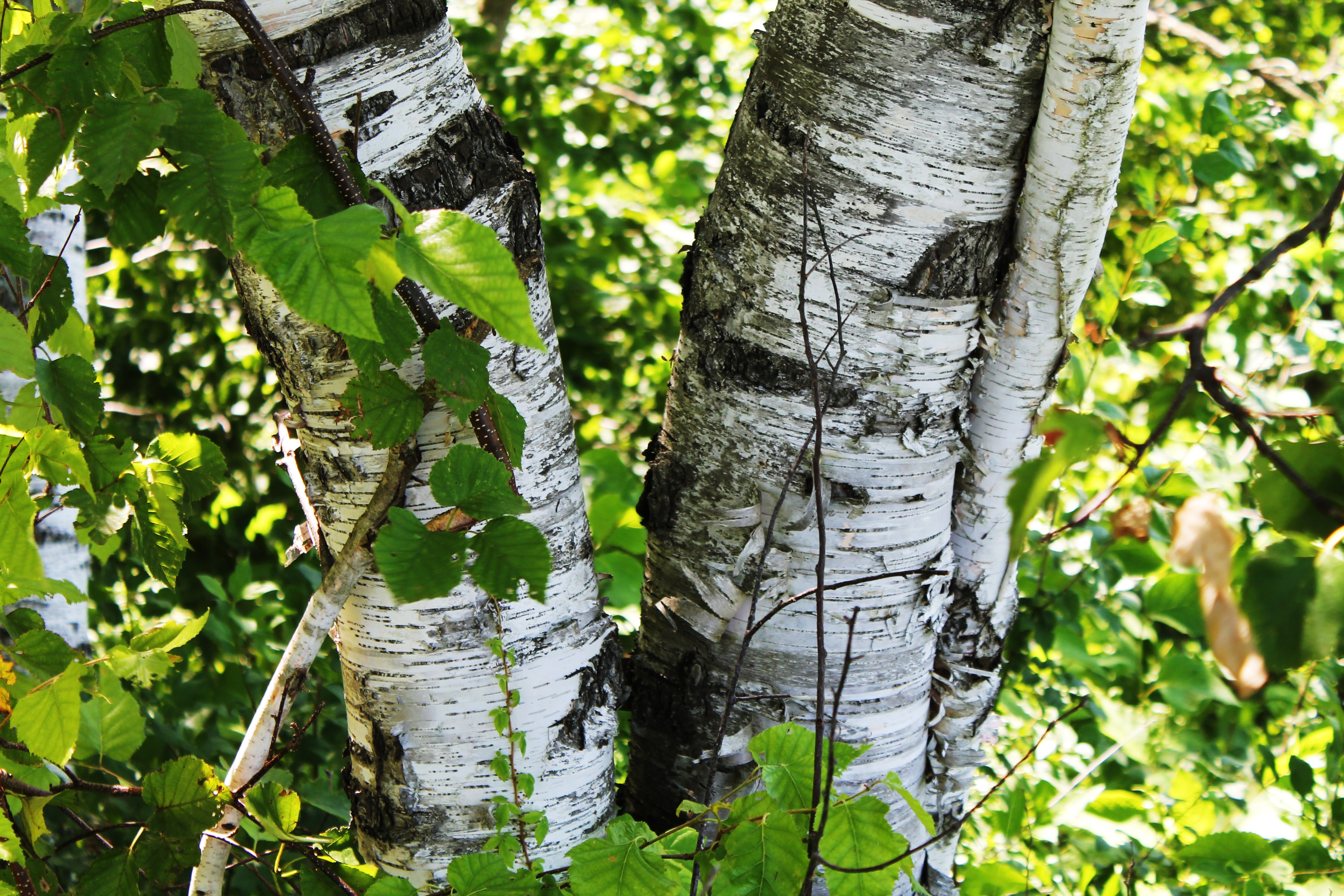
Also referred to as American white birch and canoe birch, it is a native to northern North America. It grows with either a single or multiple trunk, commonly a single trunk in forests, though I’ve seen some growing in the wild that had multiple – but that is more typical as a landscape tree. The multiple trunks, of a particular tree I have known, are serpentine tentacles of an upside down squid, but far lovelier. These trees are usually short lived. They prefer colder climate regions, and grow in many soil types. I have seen it on steep, rocky bluffs sides to flat acidic soils of the boreal forest. Its bark flakes in horizontal strips. Black marks and scars interrupt the smooth white bark. Having a high oil content, the bark is waterproof and highly weather-resistant. Hollow bark will remain intact after the wood of a downed paper birch has rotted away. It flowers from April – June. Fruit matures in fall, tiny winged seeds packed between catkin bracts. It grows in stands by itself, and/or with black or white spruce, red spruce and balsam fir, big toothed aspen, yellow birch, and maples.

A pioneer species, generally it is one of the first species to colonize an area after a disturbance: logging, fire, blow down within the northern latitudes. Paper birch is considered well adapted to fires because it recovers quickly by means of reseeding the area or regrowth from the burned tree. Carried by the wind to burned areas, seeds quickly germinate and grow into new trees. Paper birch trees are adapted to ecosystems where fires occur every fifty to hundred and fifty years; frequently an early invader after fires in black spruce boreal forests. It is not common in mature forests. A stand of paper birch is not particularly flammable, the canopy often has a high moisture content and the understory is often lush green. As such, conifer crown fires often stop once they reach a stand of paper birch or become slower – moving ground fires. These stands being fire resistant may become seed trees to reseed the area around them that was burned. In dry periods, it is flammable and will burn rapidly.
Paper birch is a winter staple for moose, not for nutrition but abundance, they prefer willow. It feeds white-tailed deer, particularly in Minnesota, large amounts of the leaves in fall. Snowshoe hares browse seedlings and grouse eat the buds. Beavers and porcupines eat the inner bark. Its seeds are Important food to many birds and small mammals , such as chickadees, ruffed grouse and voles. Paper birch sap is a favorite of yellow bellied sapsuckers.
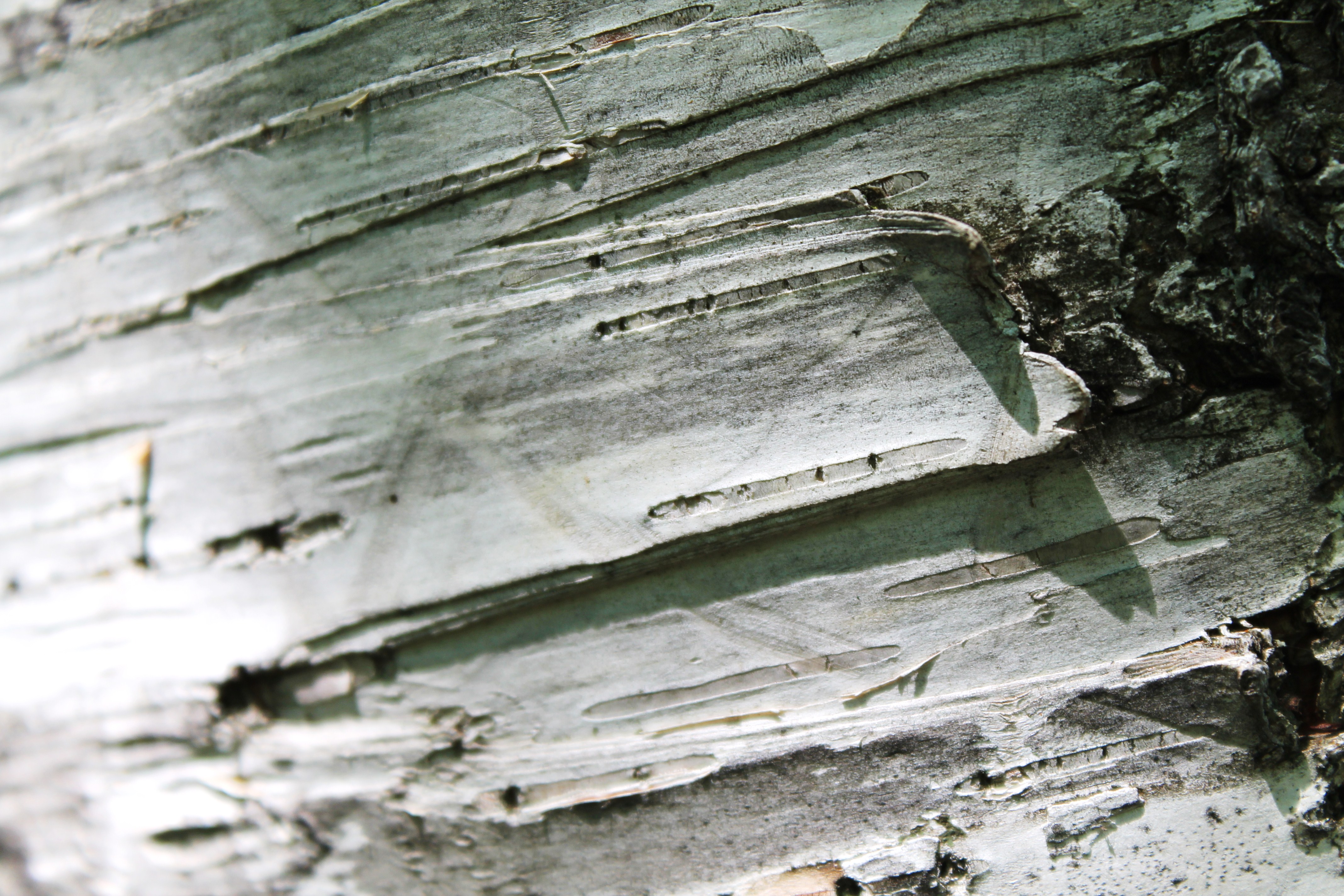
People use it for pulpwood, firewood, furniture, flooring, popsicle sticks, paper, plywood, and oriented strand board. It is also used for spears, bows, arrows, snowshoes and sleds. And historically, native Americans used it for canoes, shelter, dolls, bowls, baskets, buckets, storage bins and crafts. Sap is boiled into syrup, but outside Alaska not very common. Backing for porcupine quillwork and moose hair embroidery; the art of birchbark biting.
Ecological uses: planted to reclaim old mines and other disturbed areas, prime candidate for reforesting drastically disturbed areas. Pests: birch skeletonizer, larva that feeds on the leaves and causes browning; birch leafminer, feeds on the inside of leaf; and bronze birch borers – bore into sapwood, healthy tree is resistant but a stressed tree can die from it.
Many of the paper birches I encounter on my forays into the woods have branches cast about on the ground. And it is hard to resist touching the smooth bark of these trees as I pass. As I wonder beneath them, I think about how essential they were for housing, transportation, waterproofing, kitchenware, etc. To the early people it was more than just a pretty tree but a means of survival. They brighten any place, the embodiment of joy and quiet laughter. They seem to know some secret to enjoying life.


 In Pursuit of Wonder
Leave a comment