
July 3, 2023

The woods are overgrown in July and full of biting insects, even so I wanted to keep the connection to the woods going by frequent visits. This morning, I headed out across the backyard, down a slight incline to the driveway and gravel road, across the road, down a steep ditch and into a hay field. I decided to cut across the fields this time, hoping to make a beeline for the woods to cut off the time to get there. I don’t think it saved me a whole lot of time since the fields are in contour stripes, and I wasn’t following the contour. The hay field was fairly easy to tramp through but the oat field slowed me down. The grass-like small grain was already headed out. I didn’t want to step on them and knock them over in the process, worried that they wouldn’t pop back up. I treaded lightly, and placed each step mindfully as to inflict the least amount of damage. I exited the oats at the first opportunity, into the cornfield. We had no more than three inches of rain since the middle of May; the fields were dry, the plants stunted. The corn was quite short. I stepped between the rows as best I could. Before long, I reentered the hay field and no longer had to consider each step. With ease I traversed the mostly alfalfa and clover mixture and came to the soybean field. Well, it was supposed to be the bean field. Very few plants had germinated, the dark green plants were sparse, not stepping on them was easy.
Finally, I reached the far side of the fields. A high tensile electric fence separated the fields from the pasture, which also followed the contour between the fields and woods. I have told Jesse, my husband, many times that I need a couple of gates in the fence line across the back here. (It may be challenging to put in a gate in an already existing high tensile fence.) I search along the ground, a mixture of grass and weedy plants, looking for a place where the wire is a bit higher to crawl under. No such luck though, it runs fairly uniform, just a few inches above the ground. I took off my backpack and slid it under and then removed my camera from around my neck and reached it under, setting it on top of my pack. I knelt down, then dropped to my belly and slithered under the fence. Not exactly fun but thrilling in a way. On the other side, I got up on my knees and then stood up slowly. Stooping down, I grabbed my camera, replacing the strap around my neck and then reached back down for my backpack and slung it over my shoulders. I proceeded to cross the pasture strip, tripping a few times in the long grass. What had been lush emerald this spring was now just a dull, olive green, the plants being parched for a month and a half. The only moisture came from the morning dew; I was surprised there was even that.

I halted at the pasture edge, taking in the woods, deciding on the best spot to enter. A wall of buckthorn and other shrubby trees render most places impassable without extreme difficulty. Near a characterful oak in the pasture, I found a small opening. I squatted down, slid my pack off, reached it under the fence and then removed my camera and placed it on top. A barbed wire lay close to the ground and another about waist high. I moved forward carefully while still squatting, gingerly placing one foot on the other side of the bottom wire while staying low enough not to catch the top one; a core workout. Then I hopped, crawled, rolled, some kind of combination, through. I couldn’t stand up right away. Spiney buckthorn branches threatened above and I still had to watch my footing, an old rusty wire stuck up out of the ground waiting to trip me. I grabbed my backpack and camera, and moved forward in a squatting position. It makes the outing more of an adventure. I ducked through the tunnel of buckthorn for a couple of feet before I reached a point I could stand up, and even then I had to keep my head low for a few more feet. But I was now in the woods. In the middle of the summer, the woods are quite a bit darker than the open. Insects buzzed.
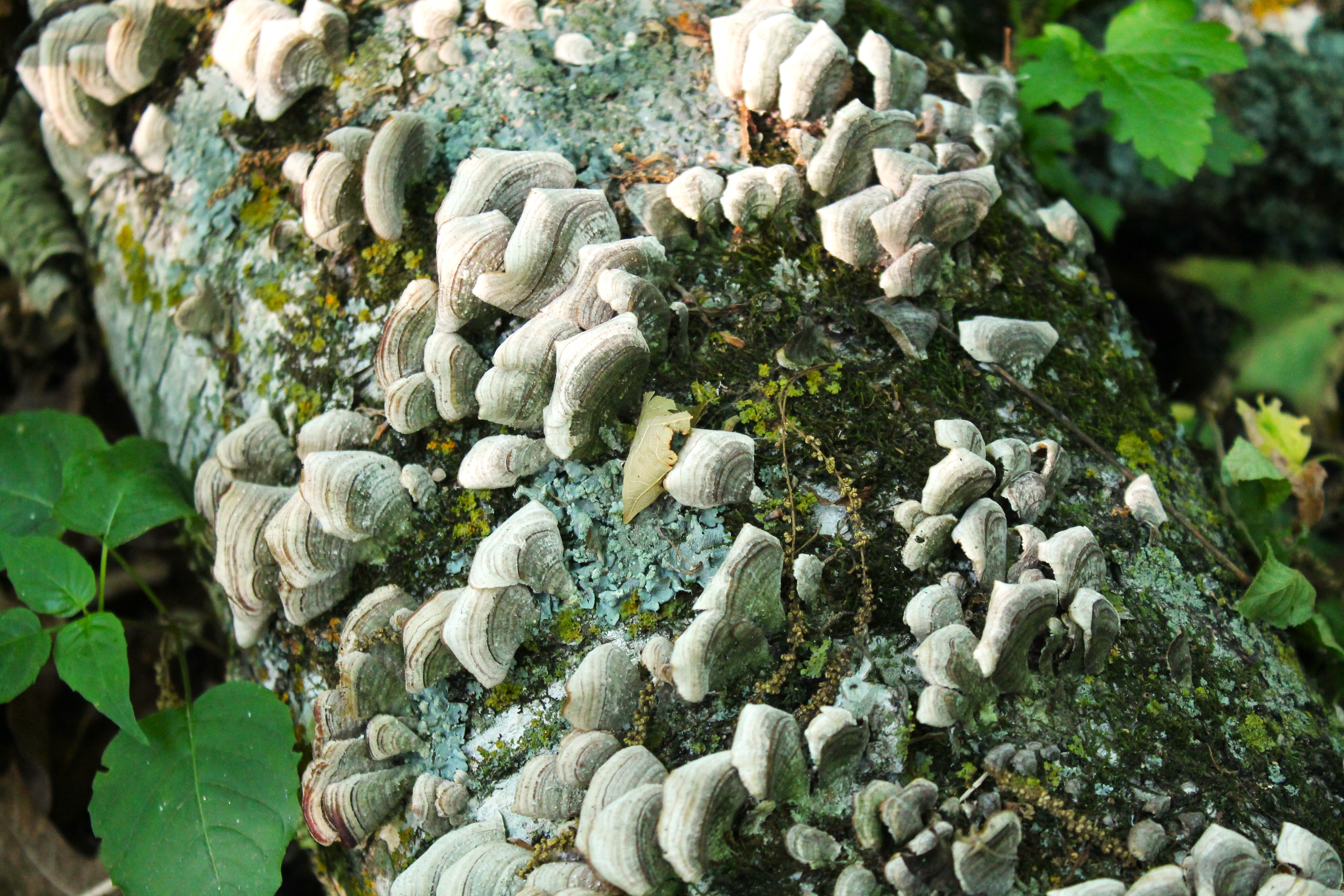
I stayed as close as I could to the fence line, traveling northward at first, stepping over fallen branches and logs. I am amazed at how thick the plants are now, how enclosed it feels compared to winter and spring. My trail takes me down, around a couple of sandstone and limestone outcrops, using tree roots as steps down at first. Then I climb back up the slope a bit. The trees opened up as I drew near to a ravine below a moderate sized pond in the pasture. It is dry now. Without rain for more than a month, it’s just a depression in the paddock. The beauty of a few maple trees takes my breath away. I love this spot. The sunlight playfully filters through the canopy, dappling the undergrowth plants in gold. I don’t know most of the plants I am observing, except garlic mustard. This is odd, it is normally a spring plant. It pops up early and flowers by late May or so and then is gone. And yet here it is with new growth. I also noticed a patch of maiden’s hair ferns. I pass an old paper birch filled with polypores stair-stepping all the way up the trunk. Then my eyes are drawn to the ground, to a white capped mushroom something has been nibbling on. At first I hoped it was an oyster but no such luck. A few steps further, I came to a paper birch log, nearly covered with turkey tails, like white-gray butterflies taking a rest.
I amble down the bluff, now heading in an easterly direction. Spiderwebs, threads stretched between plants low to the ground, gleam in the patches of sunlight. I step up to one for a closer look, its artist is nowhere in sight. I pause to admire ostrich ferns flanking a moss covered stump. My eyes shift upward as I continue onward. Basswood and elm trees. I came to the bottom, the ravine between the bluffs; and shifted directions, once again heading northward. I lingered a moment to photograph a Jack-in-the-pulpit and then gingerly walked through the patch of mayapples. I trudged down the ravine, ducking under and crawling over fallen trees and branches that blocked the way. I stepped down stones that in springtime create a mini waterfall. Now, it is incredibly dry. An interesting plant stops me for a moment; either white avens or black snakeroot. I duck under a boxelder, its trunk snapped near the base but it still lives. The bluff on my left towers above me, dense with trees and undergrowth. The ravine turns sharply to the left, west. Exposed bedrock visible through moss and ferns. Magical. I observe the roots of a fallen tree, having the appearance of bones. I sit down on the tree trunk for a few minutes, just enjoying my surroundings. I wish that the highway wasn’t above the other side of the ravine.
I scrambled up the left slope, opposite the roadside. A black cherry tree greeted me. I continued uphill, my breathing became labored. Here too were many spiderwebs. I was still climbing, this bluff is tall. Under the trees is more open here and there are a few white pines. I crest the bluff and then, saunter down the slope to a huge ravine, on the other side of which is the old logging trail. I follow the trail a ways, then to keep to my westward heading, I leave it behind me, walk around a rock slab. Down, down the slope. I came to another massive ravine. I scooted down, nearly on my bottom not to stumble and fall. I traversed the ravine, ambling up it like a ladder, sometimes literally climbing up rocks, and ducking under fallen trees. I pass the stone foundations, the ruins of a house or barn from long long ago. I crawled under the fence, entering into another pasture. The woods had looked and sounded a bit different than they had in May and June.
Visit https://www.instagram.com/bethanybenike/ for more photos


 In Pursuit of Wonder
Leave a comment